A structured communication discipline, designed to help people move from excessive explanation to purposeful articulation.
THE FRAMEWORK
Communication today takes place in increasingly complex environments where information moves faster, attention is fragmented, and ideas often compete for limited space and time.
From students entering college to professionals navigating meetings, leadership discussions, and everyday workplace interactions, the ability to communicate with clarity, structure, and purpose has become more valuable than ever.
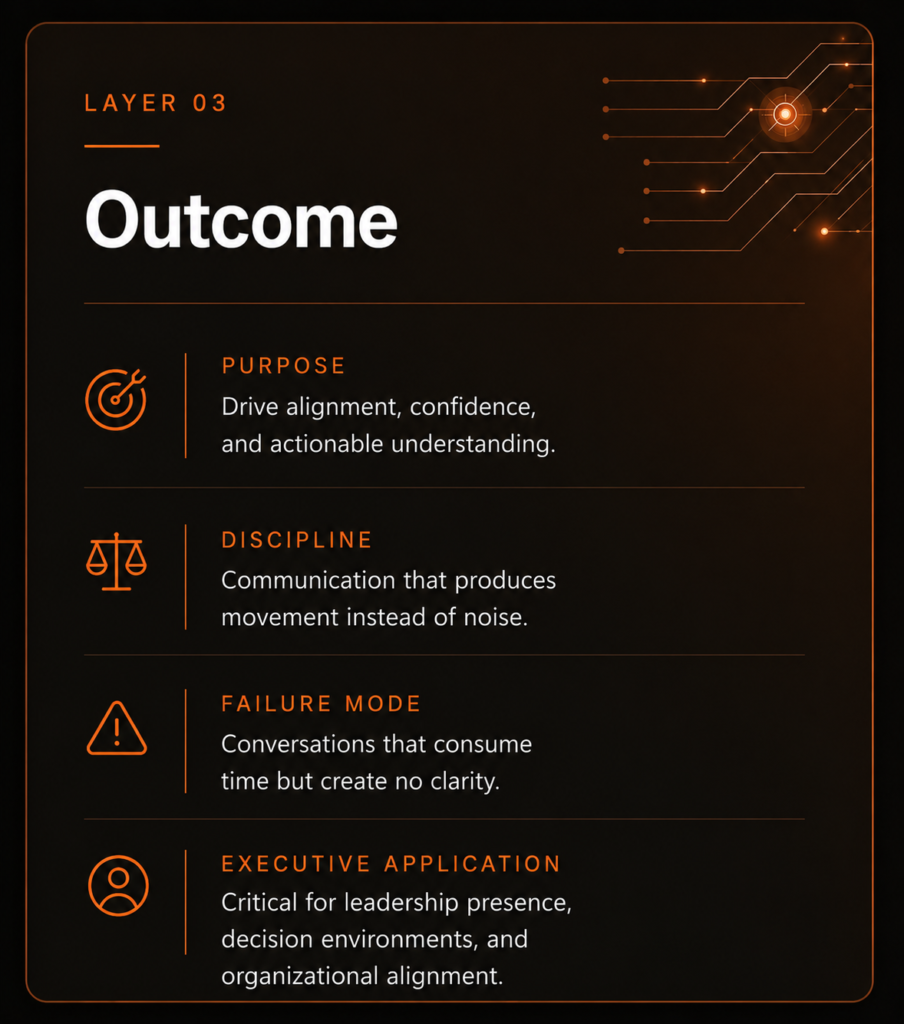
Strong articulation is rarely the result of chance. It is often the product of structure, sequence, and rhythm. The framework below illustrates one approach to moving ideas from concept to meaningful outcome.
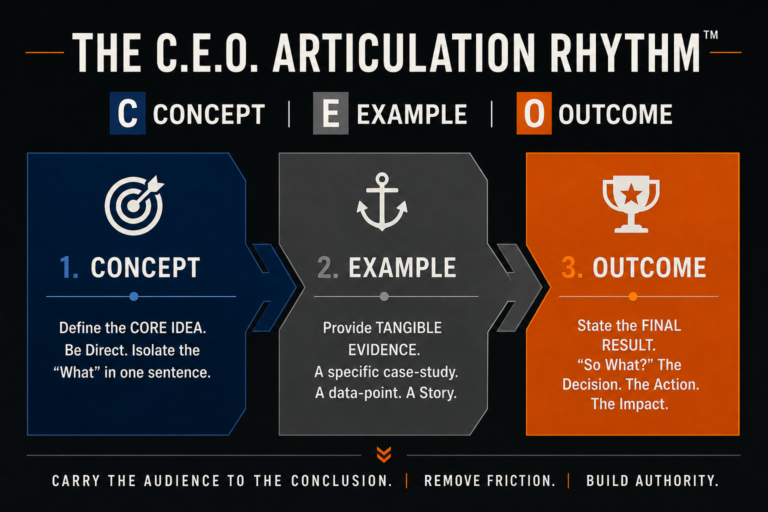
CONCEPT | EXAMPLE | OUTCOME
Ideas gain power when they move with structure.
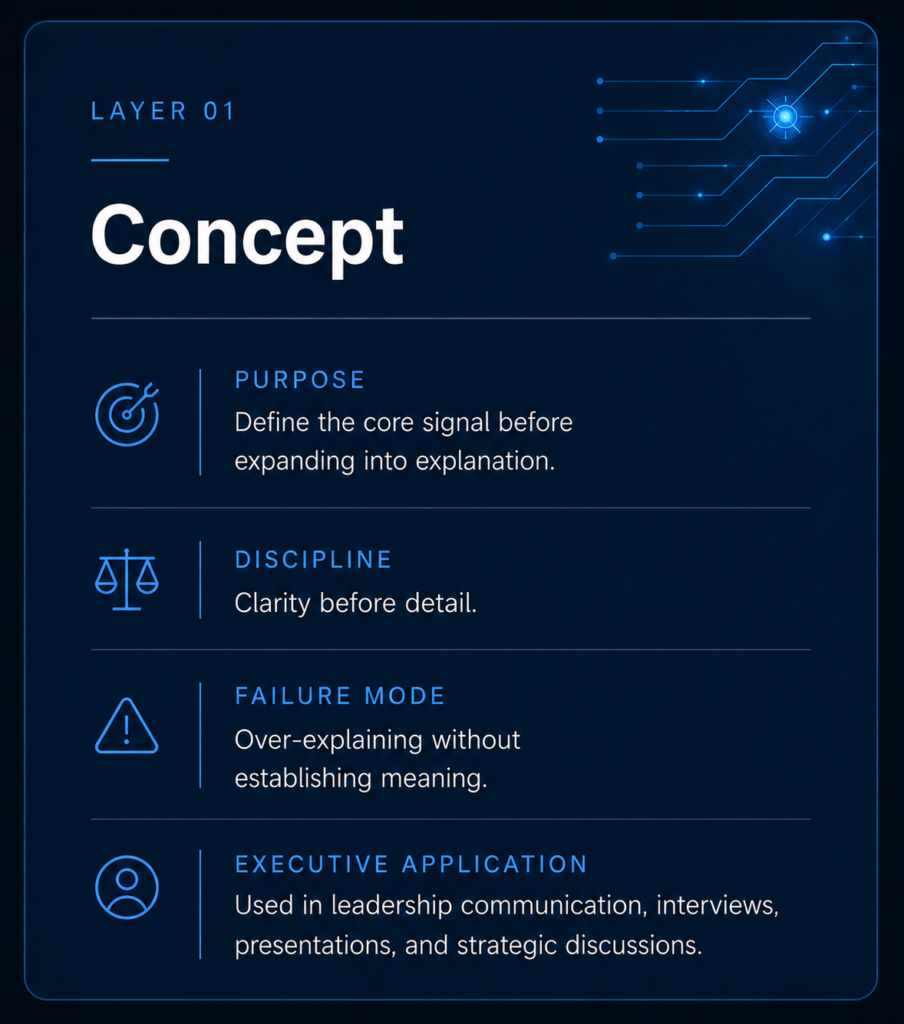
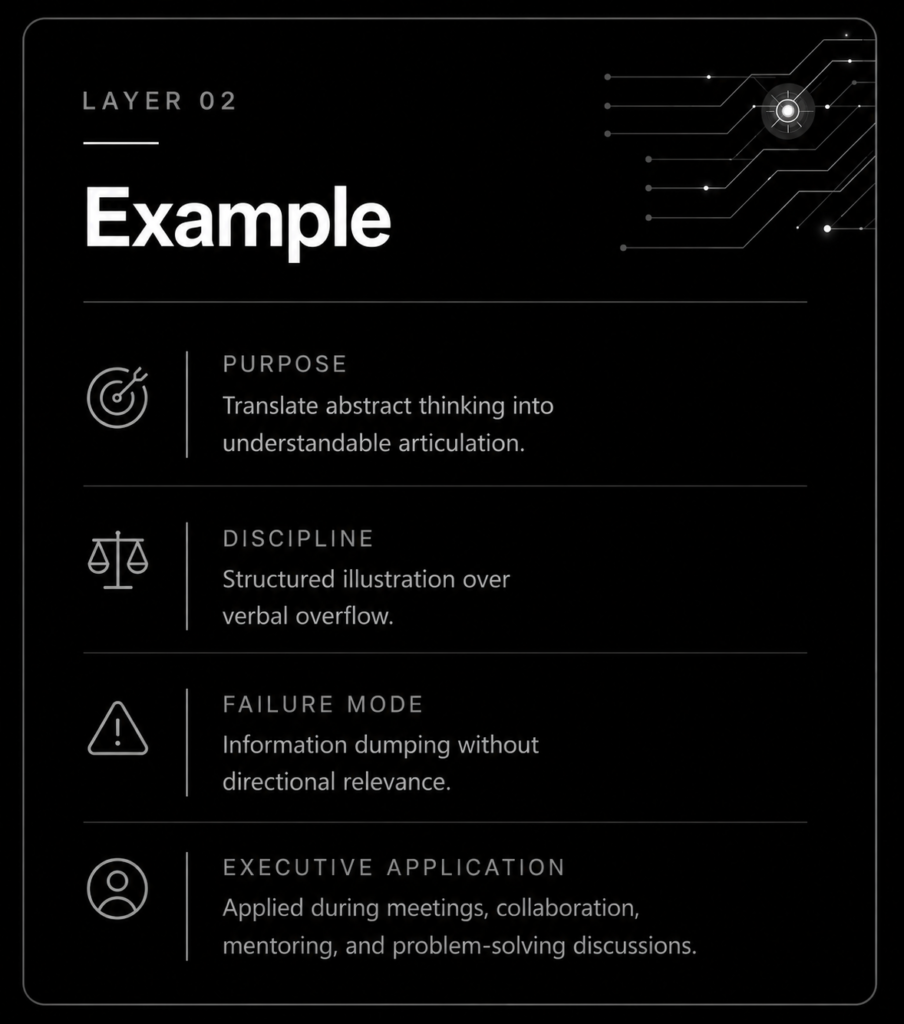
The C.E.O. Articulation Rhythm (TM) begins with a clear concept, reinforces understanding through example, and concludes with a defined outcome.
The result is communication that is easier to understand, harder to misinterpret, and more likely to influence action.
MOVING WITH THE RHYTHM
1. CAMPUS INTERVIEWS
CAREER COMMUNICATION
A student participates in campus interviews where communication clarity often matters more than memorized answers.
Clear articulation helps emerging professionals communicate with greater structure, confidence, and professional presence.
2. PITCHING TO AN INVESTOR
FOUNDER COMMUNICATION
A young entrepreneur presents a startup idea to investors while defending market viability, business credibility, and long-term growth potential under intense scrutiny.
The C.E.O. Articulation Rhythm helps entrepreneurs communicate vision, value, and commercial credibility with greater conviction.
3. CLIENT COMMUNICATION
CLIENT EXECUTIVE COMMUNICATION
A client-facing leader communicates delivery challenges, recommendations, and strategic direction to her enterprise customers.
The framework supports clearer communication during high-pressure client interactions where confidence and structure matter.
4. CONSULTING PRESENTATIONS
CONSULTING COMMUNICATION
A consultant presents transformation recommendations to executive stakeholders who expect concise, commercially relevant communication.
Structured articulation improves message sequencing, executive presence, and strategic communication during high-stakes presentations.
5. LEADERSHIP UPDATES
LEADERSHIP CLARITY
A department head delivers organizational updates across multiple teams while maintaining confidence, direction, and momentum.
The framework strengthens how leaders communicate progress, direction, and operational priorities across teams.
6. STUDENT LEADERSHIP COMMUNICATION
EMERGING LEADERSHIP
A student leader speaks during campus initiatives, competitions, presentations, or collaborative projects where her communication directly impacts influence and credibility.
Structured articulation helps emerging leaders communicate ideas with greater clarity, confidence, and audience control.
7. BOARDROOM COMMUNICATION
BOARDROOM ALIGNMENT
A senior executive presents quarterly priorities to leadership teams where unclear messaging could slow alignment, execution, and decision-making.
The C.E.O. Articulation Rhythm helps leaders communicate with brevity, precision, executive pacing, and strategic clarity under pressure.
8. ESCALATION COMMUNICATION
NEW MANAGER TRANSITION
A newly promoted manager explains a critical client escalation to her Vice President while balancing accountability, clarity, and executive composure.
Structured articulation helps emerging leaders communicate difficult situations with confidence, precision, and reduced communication friction.
9. LIFE-CHANGING CONVERSATIONS
PERSONAL ARTICULATION
A student explains to his father why choosing Arts over Commerce aligns more closely with her interests, strengths, and long-term aspirations.
The framework when put to use, helps individuals communicate important personal decisions with greater clarity, emotional control, and confidence.
10. TALENT ACQUISITION COMMUNICATION
STARTUP LEADERSHIP
A startup founder communicates vision, risk, and long-term opportunities to experienced professionals considering a transition to an emerging company.
The C.E.O. Articulation Rhythm helps leaders communicate ambition, conviction, and strategic clarity during high-stakes conversations built on trust and belief.
LEARNING & DEVELOPMENT
Articulation evolves with responsibility, influence, and institutional complexity.
STUDENTS
Learning to organize thought before expressing it.
EARLY PROFESSIONALS
Learning clarity inside fast-moving environments.
MANAGERS
Translating direction into alignment and execution.
EXECUTIVES
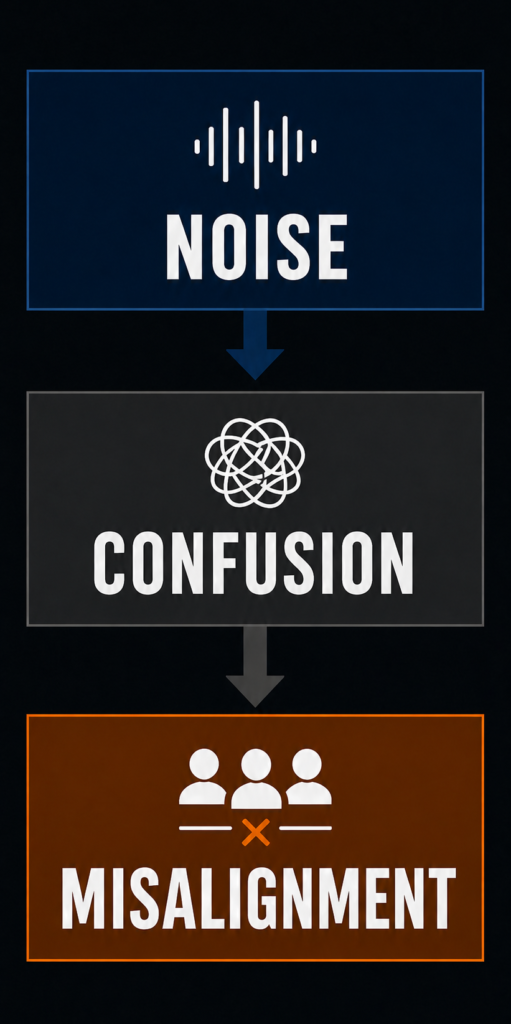
Reducing strategic noise across organizations.
INSTITUTIONS
Embedding articulation into culture, systems, and leadership development.
The future of leadership development may depend less on speaking more and more on articulating with precision.
THE FUTURE OF EXECUTIVE COMMUNICATION
Where clarity becomes strategic advantage.
We are entering an era where clarity will outperform volume.
THE FORCES SHAPING THE FUTURE
STRATEGIC BREVITY
Brevity is no longer stylistic. It is an imperative.
ATTENTION FRAGMENTATION
Clarity becomes harder as cognitive load continuously increases.
ARTICULATION ADVANTAGE
Influence: Reduce complexity without reducing meaning.
AI OVERLOAD
The future belongs to leaders who reduce noise.
Clarity may become the rarest executive skill of the next decade.
The future will reward those who articulate faster than complexity can spread.
It's not lack of intelligence - it's the pressure to fill silence.
In the age of infinite content, concise thinking becomes visible leadership.
The C.E.O. Articulation Rhythm was not designed to merely improve communication.
It was designed for an environment where clarity itself becomes strategic infrastructure.